
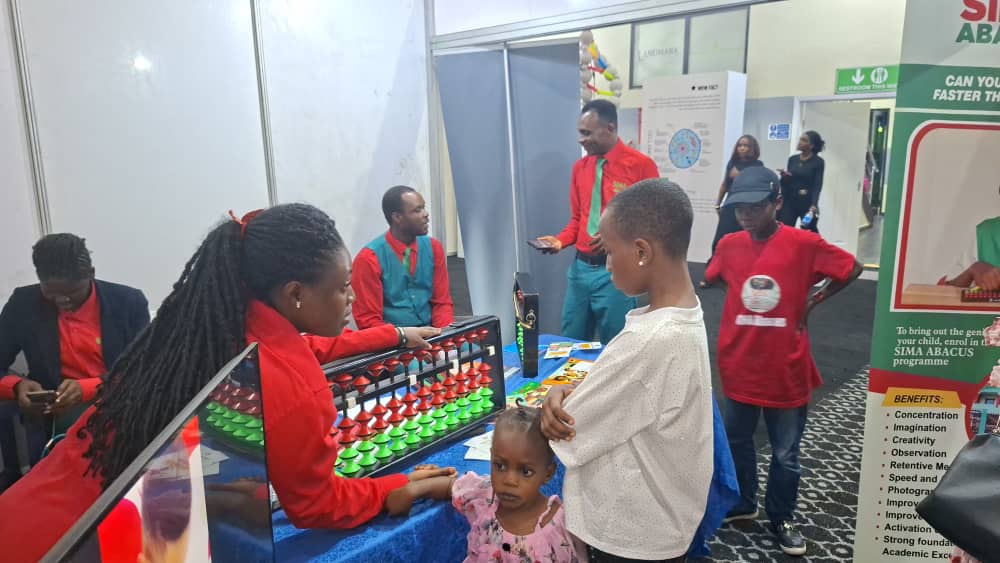
Children need more than the ability to memorise numbers and solve mathematical problems. They also need to develop the confidence to think, reason, analyse and arrive at solutions independently.
While classroom learning provides children with essential academic knowledge, activities that challenge their thinking and problem-solving abilities can further support their development. One such learning approach is Abacus training.
At SIMA Abacus & Mental Maths Academy, children are introduced to the art of using the abacus to understand numbers, perform calculations and gradually develop the ability to solve mathematical problems mentally.
But the benefits of Abacus training go beyond getting answers right. It also gives children opportunities to practise independent thinking.
1. Developing the Ability to Think Through Problems
When children learn with the abacus, they are not simply given answers to mathematical questions. They learn how to work through calculations using the movement and arrangement of beads.
As they practise, they begin to understand number relationships and follow calculation processes more confidently.
This encourages children to think through problems rather than depend entirely on memorised answers or assistance from others.
2. Building Concentration and Focus
Concentration is an important part of effective learning. Children need to pay attention to numbers, follow calculation steps and avoid distractions when solving mathematical problems.
Abacus practice provides opportunities to develop this ability.
As children progress through different levels of calculation, they learn to maintain focus, process information and complete tasks with greater accuracy.
With regular practice, these skills can support their participation in other learning activities.
3. From Physical Abacus to Mental Visualisation
One of the interesting aspects of Abacus learning is the transition from using a physical abacus to performing calculations mentally.
Initially, children use their fingers to move the beads and represent numbers. With consistent practice, they gradually develop the ability to visualise the abacus in their minds.
This mental visualisation allows them to perform calculations without physically touching an abacus.
It is an important part of developing mental arithmetic skills and encourages children to work with numbers in a more active and engaging way.
4. Encouraging Independent Problem-Solving
Independent thinking develops when children are given opportunities to attempt tasks, make decisions and work towards solutions.
During Abacus training, children practise solving calculations by applying the techniques they have learned.
As their skills improve, they become more comfortable attempting mathematical questions without immediately looking for help.
This growing confidence can encourage a more positive attitude towards learning and problem-solving.
5. Building Confidence Through Practice and Progress
Every child develops at a different pace. Some children grasp new concepts quickly, while others require more time and practice.
Abacus training provides a structured learning process through which children can gradually improve their calculation abilities.
As they begin to solve more challenging calculations accurately, they have opportunities to recognise their progress and become more confident in their abilities.
This sense of achievement can motivate them to keep learning and embrace new challenges.
6. Making Mathematics More Engaging and Enjoyable
For some children, mathematics can feel difficult or intimidating, especially when they struggle to understand numbers and calculations.
The abacus introduces a practical and interactive way of learning mathematics. Instead of relying only on written numbers, children work with beads, visual patterns and movements to understand calculations.
This makes the learning process more engaging and gives children another way to explore mathematical concepts.
At SIMA Abacus & Mental Maths Academy, we believe that learning should be both educational and enjoyable.
Helping Children Build Skills Beyond the Classroom
A child’s development involves more than academic performance. The ability to concentrate, think through challenges, approach problems confidently and learn independently are valuable skills that can support their educational journey.
Abacus training provides an opportunity for children to practise these abilities while developing speed, accuracy and confidence in mental calculations.
At SIMA Abacus & Mental Maths Academy, we use the Soroban Intelligent Mental Arithmetic approach to guide children through the learning journey, from physical abacus calculations to mental arithmetic.
Our programme is designed for children aged 3–13, providing an engaging environment where they can explore numbers, develop their abilities and enjoy learning.
Give your child the opportunity to discover what they can achieve with Abacus training.
Start Your Child’s SIMA Journey Today!
Interested in helping your child develop stronger mental calculation skills?
Get in touch with SIMA Abacus & Mental Maths Academy to learn more about our training programmes.
-
Phone: +234 813 517 8604
-
Phone: +234 701 727 5320
-
Phone: +234 908 030 5680
-
Email: simaabacus@gmail.com
-
Website: www.simaabacus.com
SIMA Time… Fun Time!