
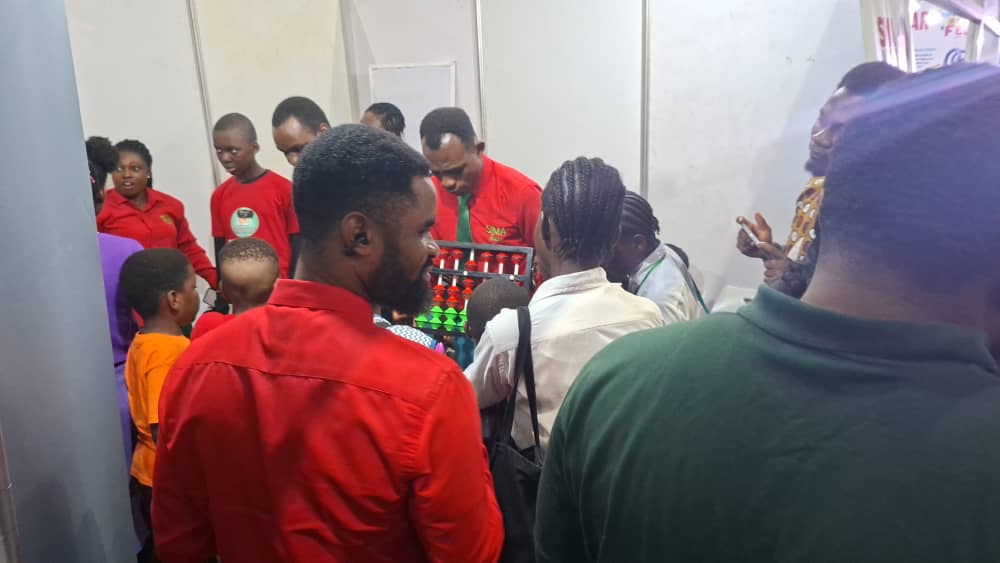
Have you ever watched a child move beads on an abacus to solve a mathematical problem and wondered how that same child could eventually calculate without touching the beads?
It is one of the interesting aspects of abacus learning. What begins as a hands-on activity can gradually develop into a process of visualising numbers and performing calculations mentally.
Understanding how children learn mental maths helps parents appreciate that this ability is developed through instruction, practice and gradual progress. Children do not simply begin calculating large numbers in their heads overnight. They first need to understand how the abacus works and learn to use it correctly.
At SIMA Abacus & Mental Maths Academy, children learn Soroban Intelligent Mental Arithmetic, progressing from the physical abacus towards mental calculation through visualisation.
So, how does this learning process work?
What Is Mental Maths?
Mental maths is the ability to perform mathematical calculations in your head without relying on a calculator or writing down every step.
For example, a child who can work out 25 + 17 mentally is using mental calculation skills. As these skills improve, the child may become comfortable solving more complex arithmetic problems.
Mental maths involves more than arriving at an answer quickly. It also requires an understanding of numbers, familiarity with calculation methods and the ability to work through problems mentally.
Children develop these skills at different rates. Regular practice and appropriate guidance can help them become more confident in their abilities.
Step 1: Children Begin by Understanding the Physical Abacus
The first stage of learning involves becoming familiar with the abacus and understanding how its beads represent numbers.
The abacus is a practical learning tool that allows children to see and manipulate quantities. By moving beads according to the rules they learn, children can represent numbers and carry out calculations.
For a beginner, this hands-on experience provides a starting point for understanding how numbers work.
Learning to Represent Numbers
Before children can perform calculations confidently, they need to understand how numbers are represented on the abacus.
They learn to move the beads into the appropriate positions to show different numbers. With guidance and practice, they become more familiar with the arrangement and movement of the beads.
Practising Basic Calculations
As children gain familiarity with the abacus, they begin practising mathematical operations such as addition and subtraction, according to their learning level.
They learn to follow the correct procedures and observe how the movement of beads changes the represented value.
This stage establishes a foundation for more advanced calculations later in the learning process.
Step 2: Children Develop Familiarity Through Practice
Learning to use an abacus correctly takes time. Children need opportunities to repeat the movements, understand the calculation methods and become more comfortable with the tool.
Repeated practice helps them become familiar with the relationship between bead movements and numerical values.
As they progress, children may begin to recognise number patterns and carry out familiar calculations with greater ease.
However, practice should focus on understanding and accuracy, not speed alone. A child who understands the process has a stronger foundation for learning more advanced techniques.
Step 3: Children Begin to Visualise the Abacus
One of the important stages in learning mental maths through abacus training is visualisation.
After becoming familiar with the physical abacus, children are gradually guided to imagine its structure and the positions of its beads in their minds.
Instead of looking at the actual beads, they begin to picture how the beads would move when solving a calculation.
This transition takes practice. Children need time to develop a clear mental image of the abacus and learn to use that image when working with numbers.
What Does Visualisation Mean in Abacus Learning?
Imagine a child solving a simple addition problem with a physical abacus.
Initially, the child moves the beads while following the calculation procedure. With appropriate training, the child may learn to picture those movements mentally and follow the same process without physically moving the beads.
The mental image becomes a tool for working through the calculation.
This is why visualisation is an important part of the journey from physical abacus practice to mental arithmetic.
Step 4: From Physical Beads to Mental Calculation
As children become more comfortable visualising the abacus, they can practise solving calculations without physically handling the tool.
At this stage, they use their learned understanding of bead positions and movements to perform calculations mentally.
For example, a child who has learnt to represent numbers on an abacus may gradually learn to imagine the corresponding bead movements when adding two numbers.
The child still needs to follow the correct calculation method, but the physical movements are replaced by mental visualisation.
With continued practice, children may become faster and more accurate at the types of calculations they have mastered.
The speed of this progression varies from child to child, and regular practice remains essential.
Step 5: Building Speed and Accuracy Over Time
Once children understand the calculation methods and become comfortable visualising the abacus, they can continue practising to improve their speed and accuracy.
Both skills matter.
A child who calculates quickly but frequently makes mistakes may need more time to strengthen accuracy. Similarly, a child who solves questions correctly but slowly may benefit from additional practice as their familiarity improves.
A balanced learning process gives children the opportunity to develop both skills without unnecessary pressure.
As their abilities grow, they can gradually attempt more challenging calculations suited to their level.
How Abacus Learning Can Support Other Learning Skills
Although the main purpose of abacus training is to develop calculation skills, the learning process also gives children opportunities to practise other useful abilities.
Concentration
Following calculation procedures requires children to pay attention to the task and the movement or imagined position of the beads.
Regular practice provides opportunities to strengthen their ability to focus on a specific activity.
Memory
Children need to remember number representations and calculation procedures as they learn to use the abacus.
As they progress towards mental calculation, they also practise recalling these methods while visualising the abacus.
Confidence in Mathematics
When children understand a method and successfully apply it to solve problems, they have opportunities to build confidence in their mathematical abilities.
Progress through manageable stages can help make learning feel more achievable.
These benefits depend on the child’s experience, instruction and practice. Abacus training should complement, rather than replace, a broad mathematical education.
What Role Do Parents Play in This Learning Journey?
Parents can support their children’s progress by encouraging regular practice and maintaining a positive attitude towards learning.
Here are a few practical suggestions.
1. Encourage consistency. Help your child follow the practice routine recommended by their instructor.
2. Be patient with progress. Some children may understand physical bead movements quickly but need more time to develop mental visualisation.
3. Celebrate improvement. Recognise growing accuracy, effort and understanding instead of focusing only on speed.
4. Avoid unnecessary comparisons. Every child progresses at a different pace. Comparing children can create pressure that makes learning less enjoyable.
5. Stay involved. Ask your child what they learnt during their lessons and allow them to explain or demonstrate a calculation when appropriate.
With patience and encouragement, parents can help children approach the learning process with greater enthusiasm.
How SIMA Abacus & Mental Maths Academy Approaches Learning
At SIMA Abacus & Mental Maths Academy, children learn Soroban Intelligent Mental Arithmetic through a structured learning approach designed to develop their calculation skills.
The programme serves children between the ages of 3 and 13 and uses a two-hand methodology as part of its abacus learning process.
Children begin by learning to use the physical abacus and gradually work towards visualisation and mental calculation as they develop their skills.
The aim is to give children opportunities to understand numbers, practise calculation methods and improve their ability to solve mathematical problems.
Each stage builds on what the child has learnt previously, making consistent practice and appropriate guidance important parts of the process.
To learn more about SIMA Abacus & Mental Maths Academy, visit the official SIMA Abacus website.
Frequently Asked Questions
How do children learn to calculate mentally using an abacus?
Children first learn how to represent numbers and perform calculations using a physical abacus. With instruction and practice, they gradually learn to visualise the abacus and imagine the bead movements required to solve calculations mentally.
At what age can children begin abacus training?
Children can begin when they are ready for the programme and its learning activities. SIMA Abacus & Mental Maths Academy serves children aged 3 to 13, with learning progressing according to their level and development.
Does every child progress from a physical abacus to mental maths at the same pace?
No. Children differ in their learning pace, familiarity with numbers and ability to visualise the abacus. Regular practice and suitable instruction help support their individual progress.
Is mental maths only about calculating quickly?
No. Mental maths also involves understanding numbers, applying calculation methods correctly and arriving at accurate answers. Speed can improve with practice, but accuracy and understanding are important foundations.
Can abacus training replace regular mathematics lessons?
Abacus training is best viewed as a way to support the development of calculation skills. Children still benefit from learning other mathematical concepts, including measurement, shapes, mathematical reasoning and problem-solving.
Every Mental Calculation Begins with Learning
The journey from moving physical beads to calculating mentally involves several stages. Children first learn to use the abacus, become familiar with calculation methods, develop visualisation skills and gradually apply those skills to mental arithmetic.
It is a process that requires instruction, patience and practice.
For parents, understanding these stages provides a clearer picture of what children are learning when they use an abacus. The goal is not simply to produce quick answers, but to help children develop their calculation abilities step by step.
At SIMA Abacus & Mental Maths Academy, children have the opportunity to explore numbers, practise mental calculation and develop their skills in an engaging learning environment.
Would you like your child to begin exploring abacus and mental maths?
Visit simaabacus.com to learn more.
SIMA Time… Fun Time!