
Mathematics is more than numbers written on a page. It is about thinking, reasoning, remembering, analysing, and finding solutions.
In a world where calculators, smartphones, and computers can perform calculations within seconds, it may seem unnecessary for children to develop strong mental math skills. However, the ability to calculate mentally remains an important skill because it encourages children to engage their minds actively rather than depending entirely on technology.
Mental math for children can help develop concentration, memory, speed, accuracy, and confidence. One of the methods that can support this development is abacus training.
Through structured abacus practice, children learn to work with numbers physically and mentally. With time, they can progress from manipulating beads on an abacus to visualising the abacus in their minds and performing calculations without physically touching it.
What Is Mental Math?
Mental math is the ability to perform mathematical calculations in your head without relying on a calculator, paper, or other external tools.
For a child, mental math can involve simple activities such as adding two numbers mentally or more advanced calculations involving multiplication, subtraction, and division.
The goal is not simply to make children calculate faster. Mental mathematics encourages children to process information, remember numbers, focus on a task, and arrive at solutions using their own reasoning abilities.
This is why developing mental math skills can contribute to a child’s overall learning experience.
5 Benefits of Mental Math for Children
1. Improves Concentration
Children live in an environment filled with distractions. Developing the ability to concentrate on a mathematical task can help them practise sustained attention.
During mental calculations, a child needs to listen carefully, remember numbers, follow a sequence, and arrive at the correct answer.
Abacus training provides structured exercises that encourage children to focus on the numbers and the calculation process.
Over time, this repeated practice can help children develop better concentration habits that can also be useful in other areas of learning.
2. Strengthens Memory
Memory plays an important role in mental mathematics.
A child may need to remember numbers, calculation steps, patterns, and previously learned techniques while solving a problem.
Abacus learning takes this further by introducing children to visualisation.
As children become more familiar with the abacus, they can learn to visualise the movement and position of the beads mentally. Instead of physically moving the beads, they begin to picture them in their minds.
This process gives children an opportunity to exercise their visual and working memory while performing calculations.
3. Develops Speed and Accuracy
Being able to solve a mathematical problem correctly is important, but being able to do so efficiently can also be valuable.
Mental math exercises give children opportunities to practise calculations repeatedly. With consistent practice, children can become more familiar with numbers and mathematical operations.
Abacus training can help children develop both speed and accuracy by providing structured calculation exercises.
The objective should not be to rush children. Instead, children can gradually develop speed as their understanding, confidence, and familiarity with numbers improve.
4. Builds Mathematical Confidence
For some children, mathematics can feel difficult or intimidating.
Repeatedly struggling with calculations can affect a child’s confidence and willingness to participate in mathematical activities.
On the other hand, successfully solving problems can create a sense of achievement.
When children practise mental calculations and begin to see themselves solving problems more confidently, their attitude towards mathematics can change.
They may become more willing to attempt challenging questions instead of immediately assuming that they cannot solve them.
Confidence does not replace understanding, but it can encourage children to keep learning and practising.
5. Encourages Whole-Brain Development
Learning mathematics can involve more than simply memorising numbers.
Abacus-based learning can combine calculation with visualisation, concentration, memory, listening, and hand coordination.
As children progress from using a physical abacus to mentally visualising it, they are encouraged to engage multiple cognitive skills during the learning process.
This is one of the reasons abacus education is often associated with whole-brain development.
The emphasis is not only on getting the right answer but also on developing the mental processes involved in reaching that answer.
How Abacus Training Supports Mental Math
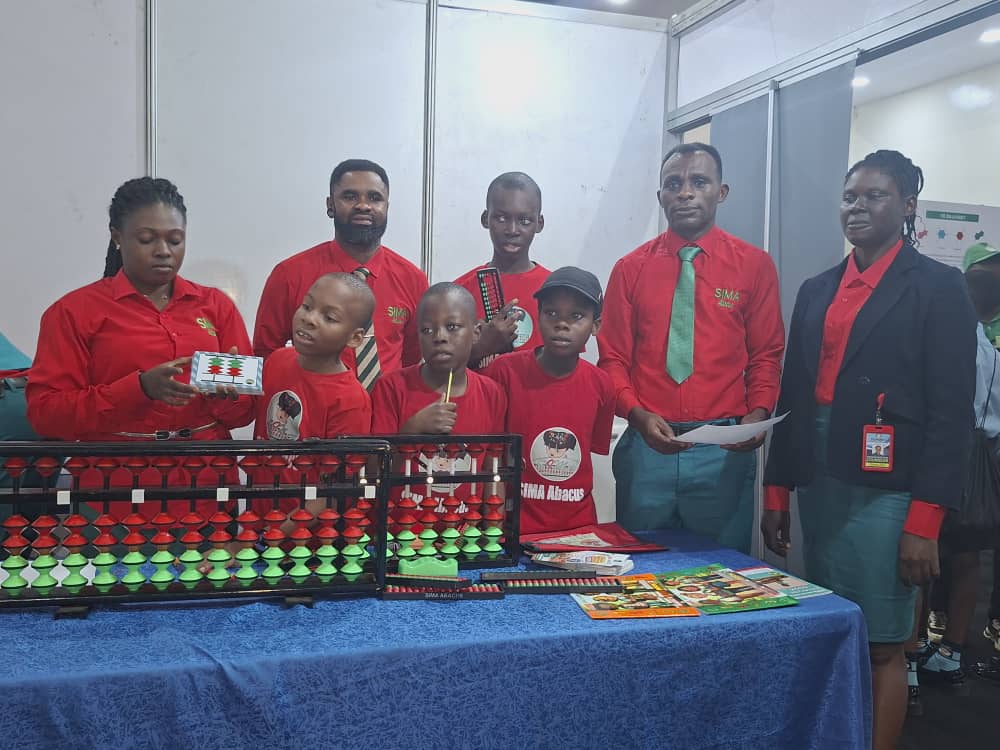
An abacus is a calculating tool made up of rods and beads. Children learn to represent numbers using the beads and perform mathematical operations by moving them according to established methods.
At the beginning, the child can physically see and manipulate the beads.
With practice, however, something interesting begins to happen.
The child can gradually learn to visualise the abacus mentally.
Instead of physically moving beads, the child begins to imagine their positions and movements while calculating.
This transition from physical manipulation to mental visualisation can make abacus training particularly interesting for children who are developing their mathematical abilities.
The process can be viewed as a progression:
Physical Abacus → Visualisation → Mental Calculation
With regular practice, children can become increasingly comfortable performing calculations mentally.
Why Early Exposure to Mental Math Can Make a Difference
Children develop important learning habits during their early years.
Introducing them to numbers in an engaging and structured way can help them become more comfortable with mathematical concepts.
Early exposure does not mean putting unnecessary pressure on children to perform complicated calculations. Rather, it means giving them opportunities to interact with numbers, practise problem-solving, and develop confidence at an appropriate level.
When learning is presented as a skill that can be developed through practice, children can begin to understand that mathematical ability is not simply something they either have or do not have.
They can learn that practice, patience, and consistency matter.
How the SIMA Abacus Method Develops Young Minds
The SIMA Abacus Method is designed to go beyond teaching children how to perform calculations.
Through abacus-based learning and mental arithmetic practice, children are encouraged to develop skills such as concentration, visual memory, calculation speed, accuracy, and confidence.
SIMA Abacus focuses on whole-brain development, helping children engage their minds while learning and working with numbers.
The use of structured abacus exercises allows children to gradually develop their mathematical abilities while also practising mental focus and visualisation.
For children between the ages of 3 and 13, learning can be introduced progressively according to their stage of development.
The aim is not simply to produce children who can calculate quickly. It is to help children develop stronger mental skills that can support their broader educational journey.
Turning Mathematics Into a Skill Children Can Enjoy
Children learn differently, and the way mathematics is introduced can influence how they perceive the subject.
When mathematics becomes nothing more than memorising formulas and solving endless problems, some children may quickly lose interest.
But when children are given opportunities to interact with numbers, visualise calculations, challenge themselves, and celebrate their progress, mathematics can become more engaging.
Abacus training provides one approach to making mathematical practice more interactive.
Children can see their progress as they move from simple calculations to more complex mental arithmetic. Each new skill can become another opportunity to practise, improve, and build confidence.
The goal is not to make every child a mathematical genius overnight.
It is to help children understand that their minds can be trained.
Mental Math Is About More Than Speed
It is easy to assume that the biggest benefit of mental math is simply calculating faster.
Speed is certainly one outcome that children can work towards, but it is not the whole story.
Mental math can encourage children to:
- Focus on a task.
- Remember information.
- Visualise numbers.
- Recognise patterns.
- Improve calculation accuracy.
- Approach problems with greater confidence.
- Develop persistence through regular practice.
These are skills that can extend beyond mathematics.
A child who learns to concentrate carefully on a calculation is also practising concentration. A child who learns to visualise numbers is exercising visual memory. A child who keeps practising after making mistakes is developing persistence.
This makes the learning experience broader than the numbers themselves.
Helping Children Think Beyond the Calculator
Technology has made calculations easier than ever. A calculator can provide an answer almost instantly.
But education is not only about obtaining answers.
It is also about developing the ability to think, reason, remember, analyse, and solve problems.
That is why mental mathematics still has a place in a technology-driven world.
The goal is not to teach children to reject calculators or technology. Instead, children can learn when technology is useful while also developing the mental skills they need to think independently.
With the right training and consistent practice, children can discover that they are capable of doing much more with numbers than they initially imagined.
Mental math for children is about more than performing calculations without a calculator. It can provide opportunities for children to develop concentration, memory, visualisation, speed, accuracy, and mathematical confidence.
Abacus training offers a structured way to introduce children to these skills. As they progress from physically using an abacus to mentally visualising it, they can develop a stronger relationship with numbers and mathematical thinking.
At SIMA Abacus, the focus goes beyond calculation. Through the SIMA Abacus Method, children are encouraged to develop their mathematical abilities while strengthening important cognitive skills that can support learning.
When children learn to think beyond the calculator, they don’t just become faster at mathematics—they become more confident thinkers.
Give your child’s mind the opportunity to grow, practise, and discover what it can achieve.
SIMA Abacus — Building Young Minds, One Calculation at a Time.