
Many parents ask the same worried question: “Why is maths so difficult for Nigerian children?”
The issue is deeper than poor grades or “not liking numbers.” In reality, why Nigerian children struggle with maths has more to do with how they are taught to think than with intelligence.
Maths anxiety is learned — and it can also be unlearned.
The Real Reason Nigerian Children Struggle With Maths
Contrary to popular belief, most Nigerian children are not bad at maths. The struggle often starts early due to the way maths is introduced and reinforced.
1. Memorisation Over Understanding
In many Nigerian classrooms, maths is taught as a set of rules to memorise:
- “Carry one”
- “Borrow from here”
- “Follow the formula”
Children are rarely taught why numbers behave the way they do. This trains them to depend on instructions instead of understanding. Once the instructions disappear, confusion sets in.
2. Fear-Based Learning Culture
Statements like:
- “Maths is hard.”
- “If you fail maths, you are not smart.”
…create emotional pressure around numbers. Over time, children associate maths with fear, embarrassment, or punishment — not curiosity.
This fear blocks thinking.
3. Abstract Numbers Too Early
Young children learn best when concepts are visual and tangible. Unfortunately, they are often pushed into abstract calculations before their brains are ready.
Numbers become symbols with no meaning — and confusion grows.
What Maths Anxiety Does to a Child’s Brain
When a child is anxious:
- Logical thinking shuts down
- Working memory reduces
- Confidence drops
This is why some children understand maths at home but freeze during tests.
The problem is not ability — it is mental wiring.
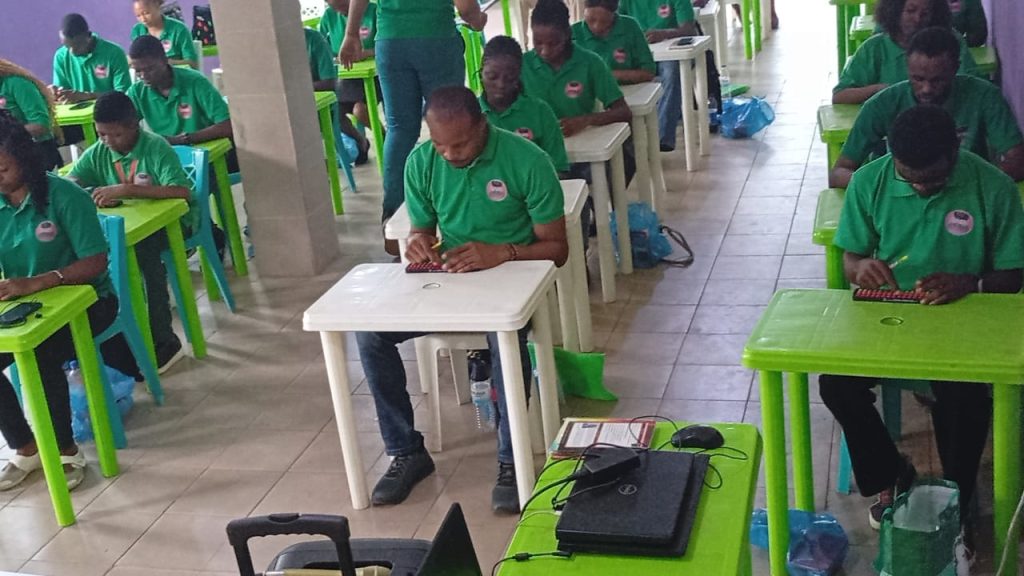
How Abacus Rewires the Way Children Think About Maths
Abacus learning does not just teach calculations. It restructures thinking patterns.
1. From Fear to Familiarity
Abacus turns numbers into something children can see and control.
When children move beads and visualize numbers, maths stops being mysterious.
Confidence replaces fear.
2. From Memorising to Understanding
Instead of forcing answers, abacus helps children:
- Understand number relationships
- See quantity, not just symbols
- Build logic step by step
This foundation makes advanced maths easier later in life.
3. From External Help to Mental Independence
As children progress, they no longer need physical tools.
They calculate mentally using visualization — a powerful cognitive skill that improves:
- Focus
- Memory
- Problem-solving
Why This Matters for Nigerian Children Specifically
Nigeria’s education system often emphasises results over reasoning. Abacus learning fills that gap by developing:
- Strong numerical sense
- Calm problem-solving ability
- Confidence across all subjects
Children who understand maths think better — not just in class, but in life.
What Parents Notice After Abacus Training
Parents consistently report:
- Improved confidence in maths
- Faster comprehension (not just speed)
- Better performance in school exams
- Increased focus and discipline
At SIMA Abacus, this transformation is not accidental — it is intentional.
Final Thought for Nigerian Parents
Your child is not slow.
They may simply be learning maths the wrong way.
When children are taught to understand numbers instead of fearing them, everything changes.
At SIMA Abacus, we don’t just teach maths — we reshape thinking.
📞 Call: +2348135178604 | +2347017275320
🌐 Visit: www.simaabacus.com