
Many Nigerian parents say the same thing: “My child understands maths at home, but fails tests in school.”
If this sounds familiar, you’re not alone.
The issue is not intelligence or effort. In most cases, the real reason why children fail maths tests is a missing thinking skill that schools rarely teach—application under pressure.
Knowing Maths vs Applying Maths
There is a big difference between:
- Knowing how a solution works
- Being able to apply it independently in an exam
Many children can follow examples when guided but struggle when:
- Questions are presented differently
- Time is limited
- No hints are given
This gap causes panic, confusion, and mistakes.
Why Schools Often Miss This Skill
Traditional classroom learning focuses heavily on:
- Memorising methods
- Repeating similar examples
- Preparing for predictable questions
While this helps short-term learning, it does not train the brain to:
- Think flexibly
- Adapt to new problems
- Stay calm while solving unfamiliar questions
As a result, understanding breaks down during tests.
The Role of Pressure in Maths Failure
Test conditions introduce stress. Under pressure, children need:
- Strong number sense
- Mental clarity
- Confidence in their thinking process
Without these, even a child who “knows” maths can forget steps or make simple errors.
The Missing Skill: Independent Mathematical Thinking
The key skill many children lack is independent thinking with numbers. This means the ability to:
- Break down problems logically
- Visualise numbers mentally
- Adjust strategies when a method doesn’t work
This skill is rarely developed through rote practice alone.
How Abacus Training Fills This Gap
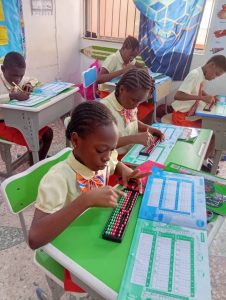
Abacus learning trains children to think, not just remember. At SIMA Abacus & Mental Maths Academy, children:
- Understand number relationships visually
- Build mental images of calculations
- Practice problem-solving without prompts
This strengthens the brain’s ability to apply knowledge under pressure.
From Guided Learning to Confident Performance
As children progress in abacus training:
- Dependence on memorisation reduces
- Mental focus improves
- Confidence replaces fear
Parents often notice children becoming calmer and more confident during tests and homework.
Why This Skill Matters Beyond Exams
Independent thinking does not only improve maths scores. It also helps children:
- Solve real-life problems
- Learn faster in other subjects
- Build long-term academic confidence
This is a foundation skill for lifelong learning.
Why SIMA Abacus Makes the Difference
At SIMA Abacus & Mental Maths Academy, our focus is on:
- Concept clarity
- Mental visualisation
- Confidence-driven learning
We help children move from knowing maths to using maths effectively.
Does your child understand maths but struggle in tests?
Enroll your child at SIMA Abacus & Mental Maths Academy today
Want to see how thinking-based maths works?
Book a trial class and experience the difference.