
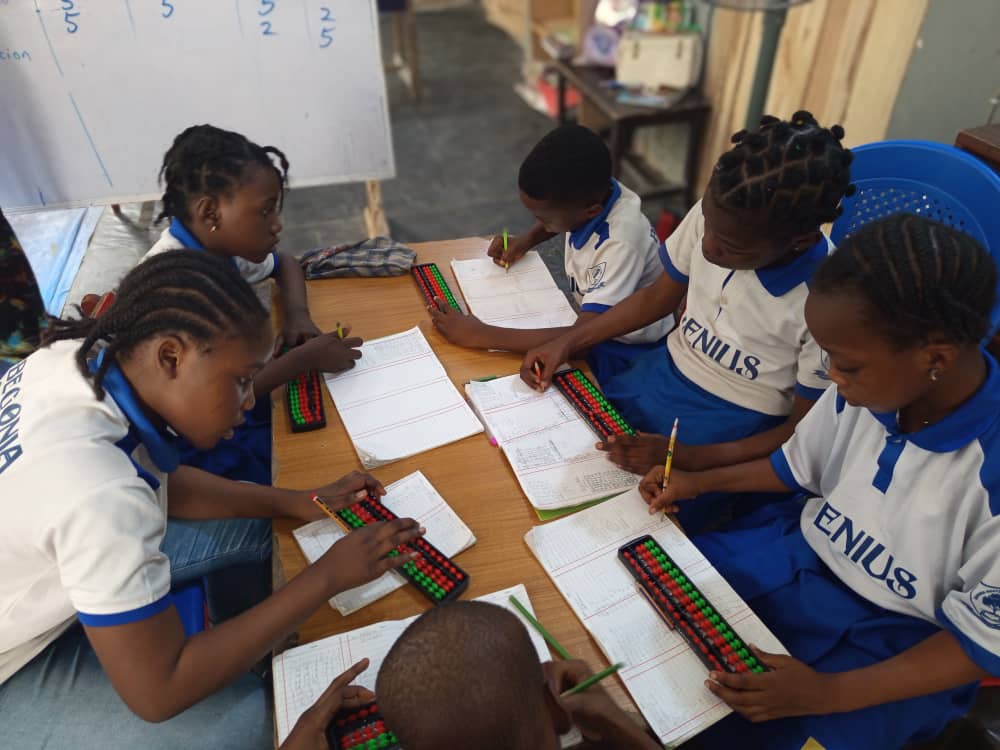
Mathematics is a core subject in every child’s education, but the way it’s taught can significantly impact how well a child understands and enjoys it. Two popular approaches are Sima Abacus training and traditional math learning. While both aim to build numerical skills, they differ in method, experience, and outcomes.
So, which one is more effective? Let’s break it down.
Understanding the Two Approaches
Sima Abacus Learning
This method uses a physical abacus to teach arithmetic. Children start by moving beads to perform calculations and gradually progress to visualizing the abacus mentally. Over time, they can solve problems quickly without any physical tools.
Traditional Math Learning
This is the standard classroom approach that relies on textbooks, written exercises, memorization of formulas, and step-by-step problem solving. It focuses on understanding concepts and applying them through practice.
Speed and Accuracy
One of the biggest differences between the two methods is how quickly children can perform calculations.
- Sima Abacus:
Children often develop rapid calculation skills. With practice, they can add, subtract, multiply, and divide faster than their peers. - Traditional Learning:
While accuracy is emphasized, speed usually develops more slowly since students rely on written steps and manual calculations.
Sima Abacus has a clear advantage in building speed without sacrificing accuracy.
Conceptual Understanding
Understanding why a method works is just as important as getting the correct answer.
- Sima Abacus:
Focuses more on calculation techniques and mental visualization. While it strengthens numerical ability, deeper theoretical understanding may need additional support. - Traditional Learning:
Places strong emphasis on concepts, formulas, and reasoning behind solutions.
Traditional learning is stronger in building conceptual depth.
Brain Development and Cognitive Skills
- Sima Abacus:
Engages both sides of the brain through visualization and logic. It improves memory, concentration, and mental agility. - Traditional Learning:
Primarily engages logical thinking and problem-solving, but may not stimulate visualization skills as much.
Sima Abacus offers broader cognitive development benefits.
Engagement and Interest
Keeping children interested in math is often a challenge.
- Sima Abacus:
Interactive and hands-on, making it fun and engaging for younger learners. - Traditional Learning:
Can sometimes feel repetitive or boring, especially if heavily focused on drills and memorization.
Sima Abacus tends to be more engaging, especially for younger children.
Real-World Application
- Sima Abacus:
Excellent for quick mental calculations in everyday situations. - Traditional Learning:
Better suited for solving complex problems, higher-level math, and academic exams.
Both methods are valuable but serve different purposes.
So, Which Is More Effective?
The truth is, it’s not about choosing one over the other.
The most effective approach is a combination of both.
- Use Sima Abacus to build speed, confidence, and strong mental math skills.
- Use traditional methods to develop deep understanding and problem-solving abilities.
Together, they create a well-rounded mathematical foundation.
Final Thoughts
Rather than seeing Sima Abacus and traditional math learning as competitors, it’s better to view them as complementary tools. Each brings unique strengths to a child’s learning journey.
By combining the two, children can become not only fast and accurate calculators but also thoughtful problem solvers—equipped for both academic success and real-life challenges.