
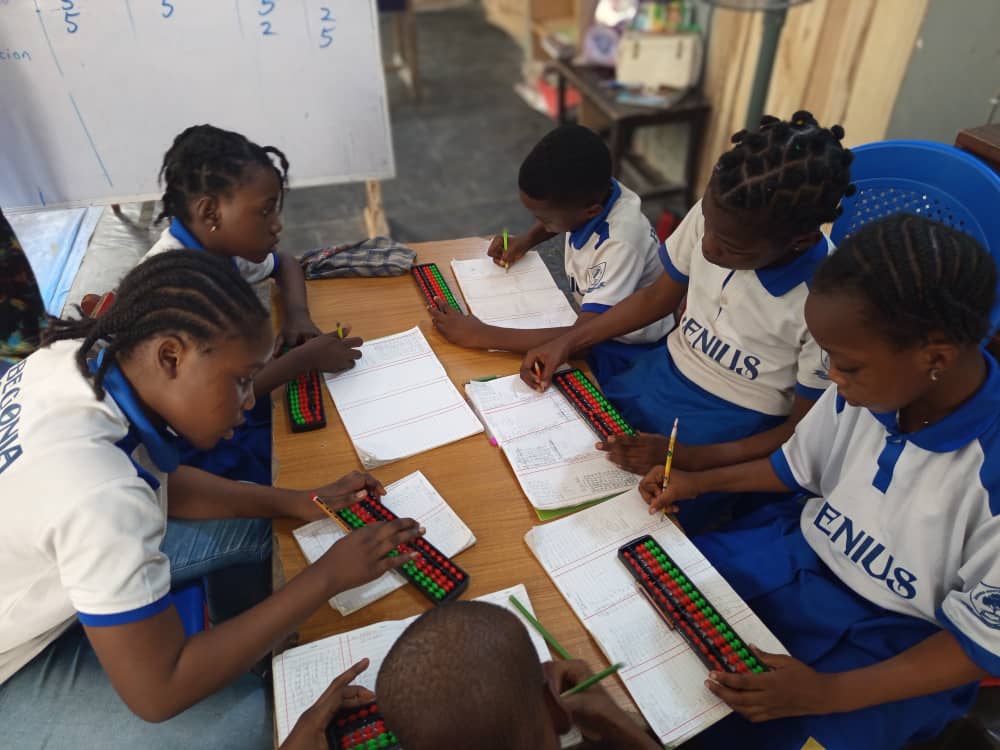
Most schools focus on what children should learn in maths — topics, formulas, and exam targets.
Very few focus on how children feel when they face numbers.
Yet, number confidence in children is often the deciding factor between long-term success and lifelong struggle in maths.
The Missing Link in Formal Education
Schools are designed around curriculum coverage:
- Syllabuses must be completed
- Exams must be passed
- Grades must be recorded
What often gets overlooked is the emotional and psychological relationship children develop with numbers.
A child can pass maths and still:
- Fear calculations
- Avoid problem-solving
- Doubt their own answers
That is not confidence — it is survival.
What Is Number Confidence?
Number confidence is a child’s ability to:
- Approach numbers calmly
- Trust their own reasoning
- Recover quickly from mistakes
- Persist without panic
It is not about speed or perfection.
It is about mental safety around numbers.
Why Schools Rarely Teach Number Confidence
1. Results Are Easier to Measure Than Confidence
Schools assess:
- Correct answers
- Time taken
- Test scores
Confidence, however, is internal — and often invisible.
2. Large Class Sizes Limit Personalised Support
In many Nigerian classrooms, one teacher manages dozens of pupils.
There is little room to rebuild confidence once it breaks.
3. Mistakes Are Often Penalised, Not Processed
When mistakes are treated as failure rather than feedback, children learn to:
- Avoid answering
- Fear participation
- Play safe instead of thinking deeply
Over time, confidence erodes.
The Cost of Low Number Confidence
Children with low number confidence may:
- Memorise without understanding
- Panic during tests
- Avoid maths-related careers later in life
This pattern has nothing to do with intelligence.
It has everything to do with psychological conditioning.
How Abacus Fills the Confidence Gap Schools Leave Behind
Abacus learning addresses what the curriculum cannot.
1. Safe Practice Without Pressure
Abacus sessions encourage exploration and repetition without fear of failure.
Children learn that mistakes are part of thinking — not proof of weakness.
2. Visible Progress Builds Self-Trust
When children can see numbers and feel improvement, confidence grows naturally.
Success becomes predictable, not accidental.
3. Calm Thinking Replaces Panic
Abacus strengthens mental structure and visualization, helping children stay composed even with complex calculations.
This is where number confidence in children truly forms.
Why Confidence Changes Everything
Once children gain number confidence:
- They attempt harder problems
- They explain their thinking
- They stop depending on others for validation
This confidence often spreads to:
- Reading
- Writing
- Public speaking
- General classroom participation
Abacus Complements School — It Does Not Replace It
SIMA Abacus does not compete with schools.
It strengthens what schools cannot always provide: confidence, calm thinking, and self-belief around numbers.
Final Word to Parents and Educators
If a child understands maths but fears it, something is missing.
When number confidence is built early, children stop asking,
“What if I’m wrong?”
and start saying,
“Let me try.”
That shift changes everything.
At SIMA Abacus, confidence is not a side benefit — it is the foundation.
📞 Call: +2348135178604 | +2347017275320
🌐 Visit: www.simaabacus.com