
Have you ever asked your child a simple maths question and watched them struggle to work out the answer without writing it down? Or perhaps your child understands what the teacher explains in class but needs more time to solve basic calculations independently.
Learning mathematics involves more than memorising formulas or completing school assignments. Children also need opportunities to become familiar with numbers, recognise patterns and practise calculations in different situations.
This is where mental maths for children becomes important.
Mental maths involves solving mathematical problems in your head rather than depending entirely on paper, a calculator or other tools. With regular, age-appropriate practice, children can become more comfortable working with numbers and develop greater fluency in basic calculations.
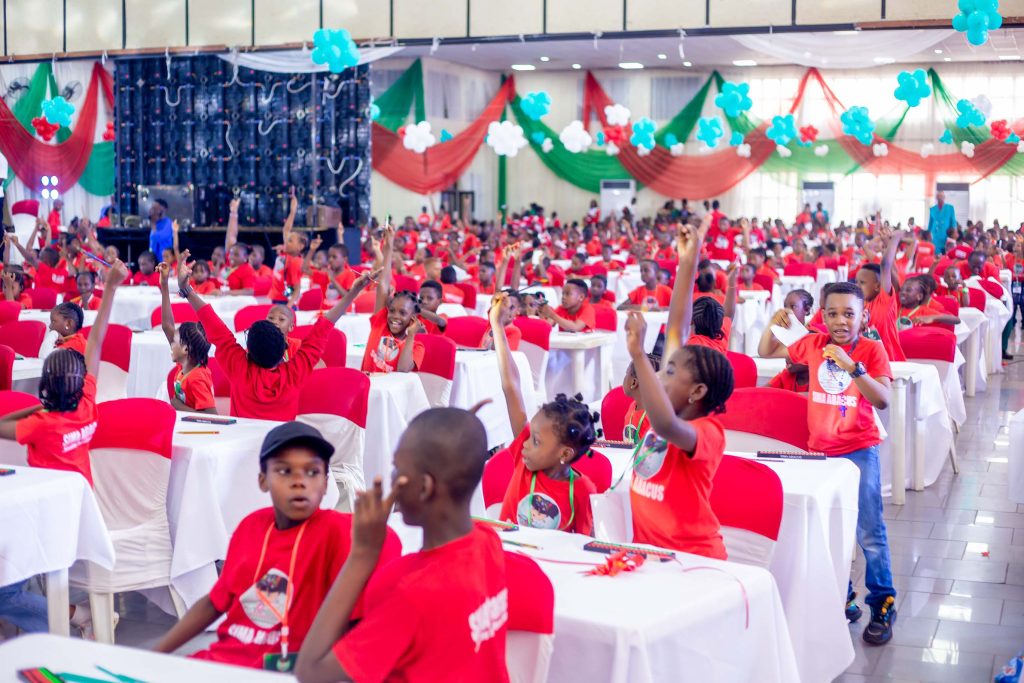
At SIMA Abacus & Mental Maths Academy, children learn through a structured approach that progresses from using a physical abacus to visualising calculations mentally.
So, why is mental maths important, and how can parents help their children develop these skills?
What Is Mental Maths?
Mental maths is the ability to perform calculations mentally. It includes activities such as adding numbers, subtracting quantities, recognising number patterns and working out simple multiplication or division problems.
For example, if a child has four sweets and receives three more, the child may work out that there are now seven sweets without needing to write down the calculation.
As children develop, they can apply mental calculation strategies to more challenging questions.
Mental maths does not mean that children should never use paper or calculators. Written methods remain useful, especially for complex problems. Instead, mental maths helps children develop another way to understand and work with numbers.
The aim is to help children choose appropriate strategies, understand their calculations and become more confident in solving problems.
5 Reasons Mental Maths Is Important for Children
1. It Helps Children Develop Number Confidence
Some children approach mathematics with excitement, while others feel nervous as soon as they see numbers.
Often, confidence grows when children have repeated opportunities to practise, understand a concept and experience progress.
Mental maths activities can provide these opportunities. A child who successfully works out a simple addition problem mentally may become more willing to attempt a slightly more difficult one.
Over time, these small achievements can help children approach calculations with greater confidence.
Parents can encourage this by giving children time to think, acknowledging their effort and avoiding harsh reactions to mistakes.
Remember, the goal is not to make every child the fastest in the class. It is to help each child become more comfortable with numbers and willing to keep learning.
2. It Encourages Concentration and Focus
Mental calculation requires children to pay attention to the numbers in a question and remember the steps needed to find the answer.
For example, solving a question such as 12 + 5 requires the child to hold the numbers in mind and work through the calculation.
As children practise suitable exercises, they have opportunities to develop attention, follow instructions and complete tasks carefully.
These habits may also be useful when children are learning other subjects or working on activities that require sustained attention.
However, concentration develops differently in every child. Mental maths should be introduced in manageable activities that suit the child’s age and ability, rather than through long sessions that create frustration.
3. It Supports Faster and More Accurate Calculations
Speed and accuracy are important parts of arithmetic, but they should develop together.
A child who rushes to answer a question may make mistakes. Another child may understand the calculation but take longer because the method is not yet familiar.
Regular mental maths practice helps children become more familiar with number combinations and calculation strategies.
For example, a child learning addition may discover that 8 + 2 makes 10, making it easier to solve related calculations.
As number relationships become more familiar, children may begin to solve certain problems more efficiently.
The important thing is to build understanding first and allow speed to improve through practice.
4. It Develops Problem-Solving Skills
Mathematics often requires children to think through a problem rather than simply recall an answer.
Mental maths activities encourage children to consider numbers, identify relationships and choose ways to reach a solution.
For example, when calculating 19 + 6, a child might recognise that adding 1 to 19 gives 20, leaving 5 more to add. The answer is therefore 25.
This is one way children can learn to break a calculation into simpler steps.
Such strategies help children see that there may be different ways to approach a mathematical problem.
Parents can encourage this type of thinking by asking questions such as, “How did you get your answer?” or “Can you think of another way to solve it?”
These conversations can be just as valuable as getting the correct answer.
5. It Provides a Foundation for More Advanced Mathematics
As children progress through school, they encounter increasingly challenging mathematical concepts.
A sound understanding of basic arithmetic can make it easier to approach topics involving larger numbers, fractions, percentages and other calculations.
For example, understanding addition and multiplication helps children work with money, compare quantities and solve everyday problems.
Mental maths practice gives children more opportunities to become familiar with numbers and calculation methods that they may use in later learning.
It does not replace the need to study broader mathematical concepts, but it can complement classroom learning and reinforce essential arithmetic skills.
How Mental Maths Skills Develop at Different Ages
Children aged 3–13 are at different stages of development. The activities that suit a preschool child may not be appropriate for a child preparing for secondary school.
Here are some examples of how parents can support mental maths at different ages.
Ages 3–5: Building Early Number Awareness
At this stage, children can explore numbers through counting, sorting, matching and identifying small quantities.
Parents can ask simple questions during play, such as:
- How many blocks do you have?
- Can you give me two more?
- Which group has more toys?
- How many oranges can you see?
Keep the activities short, practical and enjoyable. The aim is to help children become familiar with numbers rather than pressure them to perform complicated calculations.
Ages 6–9: Developing Basic Arithmetic
Children in this age group can practise age-appropriate addition, subtraction and early multiplication.
Games involving number cards, counting objects, simple shopping calculations and short mental challenges can make practice more engaging.
For example, ask your child to calculate the total cost of two inexpensive items or work out how many objects remain after some have been removed.
As children become more comfortable with these activities, introduce slightly more challenging questions based on their abilities.
Ages 10–13: Strengthening Calculation Strategies
Older children can practise more challenging mental calculations involving multiplication, division, fractions, percentages and everyday numerical problems, depending on their level.
For instance, ask them to calculate a simple discount, estimate the cost of several items or compare quantities.
Encourage them to explain their reasoning instead of focusing only on the final answer.
At this stage, children should also understand when a written method is more appropriate. Mental maths is a useful skill, but it is not the only way to solve mathematical problems.
How Abacus Learning Supports Mental Maths
One approach parents can consider when looking for ways to strengthen children’s calculation skills is abacus learning.
An abacus allows children to represent numbers physically using beads. As they practise, they learn how different bead positions represent quantities and how movements can be used to perform calculations.
With continued instruction and practice, children can progress towards imagining the abacus in their minds and using those mental images to work through arithmetic problems.
This is an important part of the learning approach at SIMA Abacus & Mental Maths Academy.
SIMA’s Soroban Intelligent Mental Arithmetic programme helps children practise calculations through a structured progression from physical abacus use to mental visualisation.
The programme provides an opportunity for children to develop their arithmetic skills through guided practice.
Parents interested in learning more can visit the official SIMA Abacus website for information about the academy and its programme.
6 Simple Ways Parents Can Encourage Mental Maths at Home
You do not need to wait until your child attends a special class to start encouraging number skills. Everyday activities provide opportunities to practise.
1. Make Counting Part of Daily Life
Ask your child to count fruits, toys, books or other familiar objects. As the child becomes more comfortable, introduce simple questions involving adding or removing items.
2. Use Shopping Activities
When shopping with your child, ask simple questions about quantities or totals. For older children, you can introduce suitable questions about change, discounts or comparing prices.
3. Play Number Games
Use number cards, board games or quick arithmetic challenges to make practice enjoyable. Keep the difficulty appropriate for your child’s level.
4. Encourage Thinking Time
After asking a question, give your child time to work through the answer. Avoid immediately supplying the solution when the child needs a little more time.
5. Praise Effort and Progress
Recognise when your child tries a new strategy, corrects a mistake or solves a problem independently. Encouragement can help make learning a more positive experience.
6. Practise Consistently Without Creating Pressure
Short, regular activities can be more manageable than occasional, lengthy sessions. If your child becomes tired or frustrated, take a break and try again later.
The goal is to make mental maths a useful part of learning, not another source of anxiety.
Common Mistakes to Avoid When Teaching Mental Maths
While encouraging children to practise is helpful, the way adults approach learning matters too.
Putting too much emphasis on speed: Children need time to understand the calculation method. Speed should develop alongside accuracy and understanding.
Comparing children: A child who takes longer to solve a problem is not necessarily less capable. Children have different learning needs and progress at different rates.
Treating mistakes as failure: Mistakes can show where a child needs additional explanation or practice. Help the child understand what went wrong.
Making every activity a test: Not every number question needs a score or a competition. Playful activities can make children more willing to participate.
Ignoring understanding: A child may memorise an answer without understanding how to arrive at it. Encourage the child to explain the steps used.
By focusing on understanding, consistency and encouragement, parents can help create a healthier learning experience.
Frequently Asked Questions About Mental Maths for Children
Is mental maths important for young children?
Yes. Age-appropriate activities involving counting, comparing quantities and simple calculations can help young children develop early number awareness. Activities should match their developmental stage and remain enjoyable.
Can mental maths improve my child’s mathematics performance?
Regular practice may help children become more fluent in basic calculations and more comfortable working with numbers. Overall mathematics performance also depends on conceptual understanding, classroom instruction, problem-solving and other factors.
How often should children practise mental maths?
Children can benefit from short, regular practice sessions suited to their age, attention span and current ability. The most suitable routine depends on the child and the learning activities involved.
Is mental maths the same as abacus training?
Not exactly. Mental maths refers to calculating in the mind. Abacus training is one structured approach that can help children develop mental calculation skills through physical bead movements and, with practice, mental visualisation.
Can parents teach mental maths at home?
Yes. Parents can introduce simple number games, counting activities and everyday calculation challenges at home. A structured programme may provide additional guidance for children who want to progress through more advanced techniques.
Conclusion: Help Your Child Build Confidence With Numbers
Mental maths is more than the ability to produce an answer without writing it down. It gives children opportunities to practise calculation strategies, understand number relationships and become more comfortable working with mathematics.
From counting toys in the early years to calculating totals and percentages as they grow older, children can develop these skills gradually through meaningful activities and regular practice.
The most important thing is to help children learn at an appropriate pace, celebrate progress and develop a positive attitude towards mathematics.
At SIMA Abacus & Mental Maths Academy, children can explore a structured approach to mental arithmetic that progresses from using the physical abacus to visualising calculations mentally.
Would you like to learn more about SIMA Abacus?
Visit www.simaabacus.com or contact the academy to enquire about its programme.
Call or WhatsApp:
- +234 813 517 8604
- +234 701 727 5320
- +234 908 030 5680
Give your child opportunities to explore numbers, practise mental calculations and grow in confidence, one step at a time.
SIMA Abacus — SIMA Time… Fun Time!