
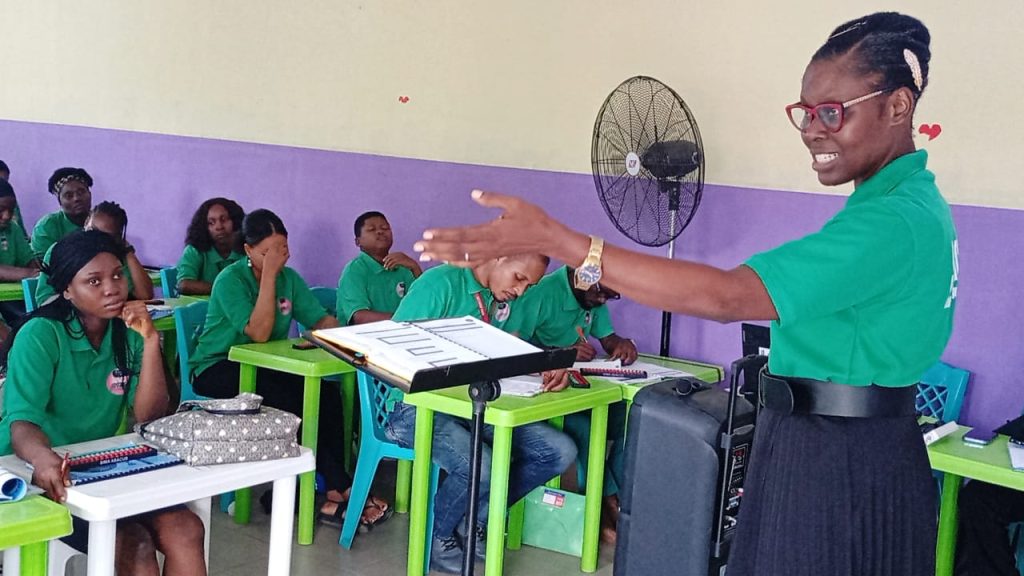
Mathematics is more than numbers on a page. For children, learning mathematics can also be an opportunity to develop concentration, memory, logical thinking and problem-solving skills.
This is one of the reasons abacus training for children continues to attract the attention of parents and educators.
An abacus gives children a physical and visual way to understand numbers. As they progress, they can move beyond physically manipulating the beads and begin to visualise the abacus mentally while performing calculations.
This transition from physical calculation to mental calculation can make learning mathematics more engaging while helping children develop important cognitive skills.
So, how exactly can abacus training support a child’s learning development?
1. Abacus Training Encourages Better Concentration
Children live in a world filled with distractions. From television and video games to smartphones and social media, maintaining attention can sometimes be challenging.
Abacus practice requires children to focus on a task, listen carefully to instructions and follow calculations step by step.
During a typical exercise, a child may need to:
- Listen to a sequence of numbers.
- Remember the numbers being presented.
- Move the appropriate beads.
- Follow a calculation process.
- Arrive at the correct answer.
This requires active participation rather than simply watching someone solve a mathematical problem.
With consistent practice, children can become more comfortable maintaining their attention on a task for longer periods.
2. It Helps Develop Memory Skills
Memory plays an important role in learning mathematics.
As children progress through abacus training, they are often required to remember numbers, calculation steps and visual representations.
Eventually, mental calculation exercises may require children to imagine the abacus in their minds rather than physically moving the beads.
This process encourages them to retain and manipulate information mentally.
For example, instead of physically moving beads for every calculation, a child may learn to visualise the movement of the beads and arrive at an answer mentally.
This combination of memory and visualisation can make abacus learning a valuable mental exercise for children.
3. It Builds Mental Calculation Skills
One of the most recognisable benefits of abacus education is the development of mental calculation.
At the beginning, children use the physical abacus to understand quantities and perform calculations.
With practice, they can gradually learn to visualise the abacus and perform calculations mentally.
This can help children become more comfortable with:
- Addition
- Subtraction
- Multiplication
- Division
- Number relationships
- Quick calculations
The goal is not simply to make children calculate faster. It is also to help them develop a stronger understanding of numbers and become more confident when working with mathematics.
4. Abacus Learning Develops Visualisation
Visualisation is an important part of mental arithmetic.
When children are trained to imagine the abacus in their minds, they begin to create a mental representation of the beads and their positions.
They can then use this mental image to work through calculations.
This means that the child is not only thinking about an answer but also mentally representing the calculation process.
Visualisation can make abstract mathematical ideas more concrete and engaging for young learners.
5. It Encourages Listening and Processing Skills
Abacus activities can involve more than looking at numbers.
Children may be asked to listen to numbers being called out and calculate the answer without seeing the written problem.
This requires them to:
Listen → Remember → Process → Calculate → Respond
The ability to receive information, process it and respond appropriately is useful not only in mathematics but also in many areas of learning.
6. It Can Increase Confidence in Mathematics
A child who constantly struggles with mathematics may eventually begin to believe that they are simply “not good at maths.”
Abacus learning can provide opportunities for children to practise calculations progressively, starting from simpler exercises and advancing as their skills develop.
As children successfully solve problems, they can experience the satisfaction that comes with mastering a new skill.
That sense of achievement can contribute to greater confidence.
Instead of approaching mathematics with fear, a child may begin to see calculations as something they can learn and improve through practice.
7. Regular Practice Encourages Discipline
Like many skills, mental calculation improves through regular practice.
Abacus training encourages children to practise repeatedly, learn from mistakes and gradually improve their performance.
This can introduce children to an important learning principle:
Progress comes with consistent practice.
The lesson goes beyond mathematics. Children can begin to understand that difficult skills can become easier when they remain committed and continue practising.
8. It Makes Mathematics More Interactive
Traditional mathematics lessons often involve writing numbers on paper and solving problems.
An abacus introduces a physical element into the learning process.
Children can see and manipulate the beads while learning about numbers and calculations.
This can make mathematics feel more interactive and engaging, particularly for younger learners who enjoy learning through activities.
Abacus Training Is About More Than Speed
It is easy to assume that the main purpose of abacus education is to help children calculate very quickly.
Speed can certainly be developed through practice, but effective abacus education is about much more than speed.
It can encourage children to develop:
- Concentration
- Memory
- Visualisation
- Number sense
- Listening skills
- Mental calculation
- Confidence
- Consistency
- Problem-solving ability
The combination of these skills can contribute to a child’s overall learning experience.
How Parents Can Support Abacus Learning at Home
Parents can play an important role in helping children get the most from their abacus training.
Here are a few simple ways to support your child:
1. Encourage Regular Practice
Short, consistent practice sessions can be more beneficial than waiting until the last minute before a test or competition.
2. Celebrate Progress
Focus not only on getting the correct answer but also on improvement.
Recognise when your child completes an exercise, improves concentration or solves a problem they previously found difficult.
3. Avoid Creating Pressure
Learning should be challenging, but excessive pressure can make children lose interest.
Encourage your child to see mistakes as part of the learning process.
4. Ask Them to Explain Their Thinking
Instead of always asking, “What is the answer?” try asking, “How did you get your answer?”
This encourages children to think about the process behind their calculations.
Who Can Benefit From Abacus Training?
Abacus programmes can be particularly useful for children who are developing their foundational mathematics skills and want to improve their mental calculation abilities.
However, every child learns differently.
Some children may be attracted to the visual nature of the abacus, while others may enjoy the challenge of mental calculations and timed exercises.
The key is to provide an appropriate learning environment, qualified instruction and consistent practice.
Frequently Asked Questions About Abacus Training for Children
What age can a child start abacus training?
The appropriate starting age can vary depending on the child’s readiness and the programme. Many abacus programmes are designed for young learners because they introduce mathematical concepts through practical and visual activities.
Does abacus training help with mental maths?
Yes. One of the major purposes of abacus education is to help children progress from physical bead manipulation to mental visualisation and calculation.
Can abacus training improve concentration?
Regular abacus exercises require children to focus on numbers, instructions and calculation processes. Consistent practice can therefore provide opportunities to strengthen concentration.
Is abacus training only for children who are good at mathematics?
No. Children do not need to already be excellent at mathematics before starting. Training can be structured progressively, allowing learners to develop their skills step by step.
How often should children practise?
Consistency is important. The appropriate practice schedule depends on the child’s programme, age and level, but regular practice can help reinforce what is taught during lessons.
Conclusion
Abacus training can be much more than learning how to move beads and calculate numbers.
For children, the learning journey can involve concentration, memory, visualisation, listening, mental calculation and confidence.
As children progress from using a physical abacus to visualising calculations mentally, they are challenged to think about numbers in a different way.
And perhaps one of the most valuable lessons is this: mathematical ability is not simply about getting answers; it is also about developing the ability to think, focus, practise and solve problems.
At SIMA Abacus, our goal is to make mathematics an engaging learning experience while helping children develop skills that can support them both inside and outside the classroom.
Give your child an opportunity to discover what they can achieve with the right guidance, consistent practice and a strong foundation in mental mathematics.
Contact Us Now:
SIMA Abacus House
Klm 2, LASU–Isheri Expressway, Idowu Egba Bus Stop
(Near Diamond Estate), Isheri, Lagos.
Phone:
+234 (0) 813 517 8604
+234 (0) 701 727 5320
+234 (0) 908 030 5680