
When children first learn numbers, they often rely on their fingers. It’s natural, simple, and effective—but it’s only the beginning. What if your child could move beyond counting and start seeing numbers in their mind?
This is exactly what abacus training does. It transforms the way children understand and interact with numbers—from physical counting to powerful mental visualization.
The First Step: Concrete Learning with the Abacus
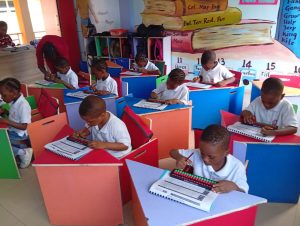
At the early stage, children use a physical abacus to perform basic arithmetic. They move beads to represent numbers, learning concepts like addition and subtraction in a hands-on way.
This stage is important because it:
- Builds a strong foundation in number sense
- Makes abstract math concepts tangible
- Engages both visual and tactile learning styles
Instead of memorizing, children experience how numbers work.
The Transition: From Physical to Mental
As children become more comfortable, something remarkable happens—they begin to rely less on the physical abacus and more on their imagination.
They start to:
- Picture the abacus in their mind
- Move beads mentally
- Solve problems without touching a tool
This shift is where real cognitive development takes place.
The Power of Visualization
Mental visualization is a skill used by top performers in many fields—not just math. Abacus training develops this ability early in life.
When children visualize an abacus, they are:
- Activating both sides of the brain
- Strengthening memory and recall
- Increasing processing speed
This allows them to perform calculations quickly and accurately—often faster than using a calculator.
More Than Math: A New Way of Thinking
The benefits of this transformation go far beyond numbers. Children trained in abacus often show improvements in:
- Concentration: Staying focused for longer periods
- Confidence: Trusting their ability to solve problems
- Creativity: Thinking in images and patterns
- Academic performance: Applying strong mental skills across subjects
They don’t just become better at math—they become better learners.
Breaking Free from Finger Counting
Finger counting is a helpful starting point, but it has limits. It can slow children down and make complex calculations difficult.
Abacus training helps children move beyond this stage by:
- Replacing fingers with mental imagery
- Encouraging structured thinking
- Building speed and accuracy
Over time, children no longer need physical aids—they carry the “abacus” in their mind.
Preparing Kids for a Smarter Future
In today’s fast-paced world, the ability to think quickly and clearly is a major advantage. Abacus training equips children with:
- Mental agility
- Strong problem-solving skills
- Independent thinking habits
These skills are valuable not just in school, but in everyday life.
The journey from fingers to visualization is more than a learning process—it’s a transformation in how children think.
Abacus training doesn’t just teach kids how to calculate. It teaches them how to see, process, and understand numbers in a deeper way.
And that’s a skill they will carry with them for life.