
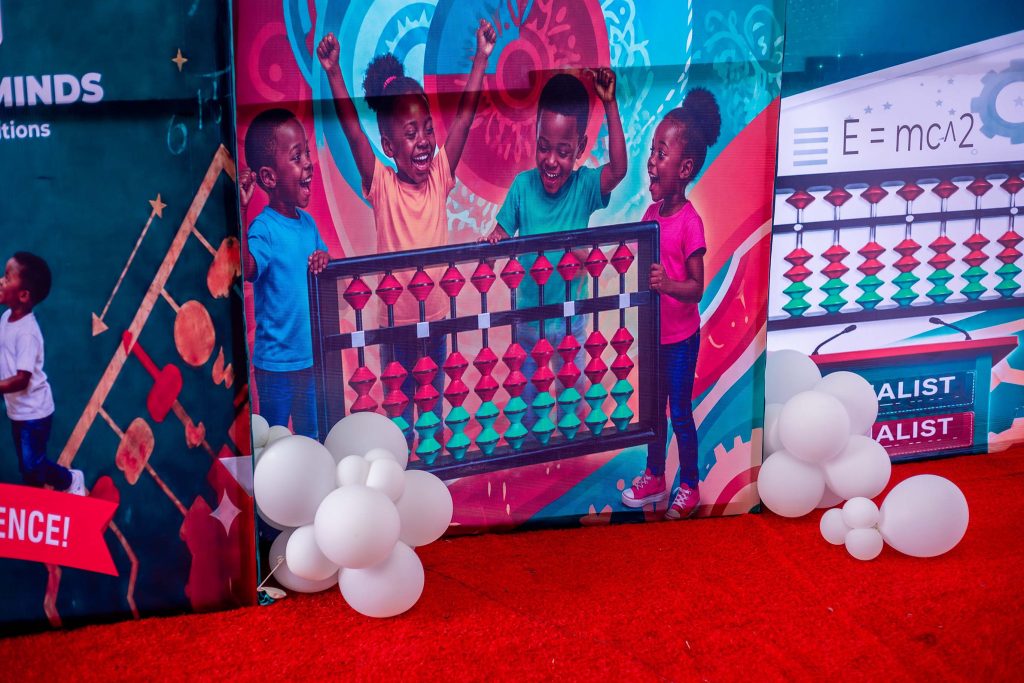
Every parent wants to see their child thrive—not only in school but also in life. While quality education and dedicated teachers are essential, one of the greatest gifts a parent can give a child is the opportunity to develop a strong, agile, and confident mind.
This is one of the reasons children who learn abacus often excel. Beyond becoming faster at mathematics, they develop stronger concentration, better memory, enhanced problem-solving skills, and greater self-confidence.
At SIMA Abacus, we believe mathematics is simply the starting point. Our mission is to help children unlock their full potential by developing the cognitive skills they need for lifelong success.
What Makes Abacus Learning Different?
Traditional mathematics education often focuses on memorizing formulas and solving problems on paper. While this approach has its place, it doesn’t always strengthen the thinking processes behind learning. The SIMA Abacus Method takes a different approach.
Children begin by learning with a physical abacus, using both hands to move beads while performing arithmetic operations. As they gain confidence, they gradually transition to solving problems by visualizing the abacus in their minds—a technique known as mental arithmetic.
This unique learning process stimulates the brain and develops essential cognitive abilities, including:
- Concentration
- Visualisation
- Memory
- Logical reasoning
- Processing speed
- Creativity
Rather than simply teaching children what to calculate, abacus training teaches them how to think more efficiently.
Stronger Mathematical Skills
One of the most obvious benefits experienced by children who learn abacus is a significant improvement in mathematics.
Through regular practice, children learn to:
- Perform calculations more quickly
- Develop a deeper understanding of numbers
- Improve accuracy
- Solve problems mentally with confidence
- Reduce anxiety associated with mathematics
Instead of depending on calculators or counting with their fingers, children become comfortable solving mathematical problems in their minds.
As their abilities improve, mathematics becomes an enjoyable challenge rather than a subject to fear.
Improved Concentration and Focus
Today’s children are surrounded by distractions—from smartphones and tablets to television and video games. Maintaining focus has become increasingly difficult.
The SIMA Abacus Method helps children strengthen their attention span by encouraging them to:
- Listen carefully to instructions
- Visualize numbers mentally
- Remember bead positions
- Perform calculations quickly
- Respond accurately under time limits
These repeated mental exercises train the brain to remain focused for longer periods.
Many parents notice that their children become more attentive not only during mathematics lessons but also while reading, studying, and completing homework.
Better Memory and Information Retention
Memory is one of the foundations of academic success.
Every day, children are expected to remember:
- Classroom lessons
- Teacher instructions
- Mathematical formulas
- Spellings and vocabulary
- Reading assignments
The visualization techniques used in abacus training naturally strengthen both visual memory and working memory.
As children repeatedly picture the abacus in their minds, they improve their ability to store, process, and recall information more effectively—making learning easier across multiple school subjects.
Increased Confidence and Self-Belief
Many children lose confidence after repeatedly struggling with mathematics.
Abacus learning changes that experience.
As children become quicker and more accurate in solving problems, they begin to trust their own abilities. This confidence often extends far beyond mathematics.
Children frequently become more willing to:
- Participate in classroom discussions
- Speak confidently in front of others
- Enter academic competitions
- Solve unfamiliar problems
- Make decisions independently
When children believe in themselves, they become more willing to embrace new challenges.
Whole-Brain Development
One of the greatest strengths of the SIMA Abacus Method is its emphasis on whole-brain development.
Unlike learning methods that primarily stimulate one way of thinking, abacus practice encourages both the left and right sides of the brain to work together.
This balanced development enhances skills such as:
- Analytical thinking
- Creativity
- Visualization
- Logical reasoning
- Observation
- Hand-eye coordination
- Mental agility
By strengthening multiple cognitive abilities at the same time, children become more effective learners in every aspect of their education—not just mathematics.
Academic Benefits Beyond Mathematics
Although abacus is widely known for improving mathematical ability, its benefits extend into many other areas of learning.
Children who consistently practice the SIMA Abacus Method often experience improvements in:
Reading Comprehension
Improved concentration enables children to understand, retain, and recall what they read more effectively.
Writing Skills
Better focus helps children organize their thoughts clearly and express themselves with greater confidence.
Science and Logical Thinking
The reasoning skills developed through mental arithmetic support scientific thinking, analysis, and experimentation.
Problem-Solving
Children become more confident when approaching unfamiliar challenges because they learn to think critically and systematically.
Classroom Participation
Greater confidence encourages children to ask questions, answer confidently, and actively engage in classroom activities.
Together, these improvements contribute to stronger overall academic performance.
Skills That Prepare Children for the Future
The world is changing rapidly, and future success will depend on far more than memorizing information.
Children need lifelong skills such as:
- Critical thinking
- Creativity
- Quick decision-making
- Adaptability
- Strong memory
- Effective problem-solving
- The discipline developed through abacus training provides an excellent foundation for these essential life skills.
Whether a child dreams of becoming a doctor, engineer, entrepreneur, scientist, teacher, or artist, the ability to think clearly, learn quickly, and solve problems confidently will always be an advantage.
Why Parents Choose SIMA Abacus
At SIMA Abacus, our goal is much more than teaching children to calculate quickly.
We are committed to developing confident, focused, and intellectually capable learners through:
- A structured, progressive curriculum
- Experienced and supportive instructors
- Interactive classroom sessions
- Mental visualization techniques
- A whole-brain learning approach
- Regular assessments and competitions
- A fun, engaging learning environment
- Our programme helps children enjoy learning while developing skills that will benefit them throughout their academic journey and beyond.
Children who learn abacus gain far more than the ability to perform quick calculations. They develop stronger concentration, sharper memory, greater confidence, improved problem-solving abilities, and a mindset that supports lifelong learning.
At SIMA Abacus, we are passionate about helping children discover their full potential through a proven learning method that builds both mathematical excellence and cognitive development.
Invest in your child’s mind today, and you’ll be investing in their success for years to come.